Definition
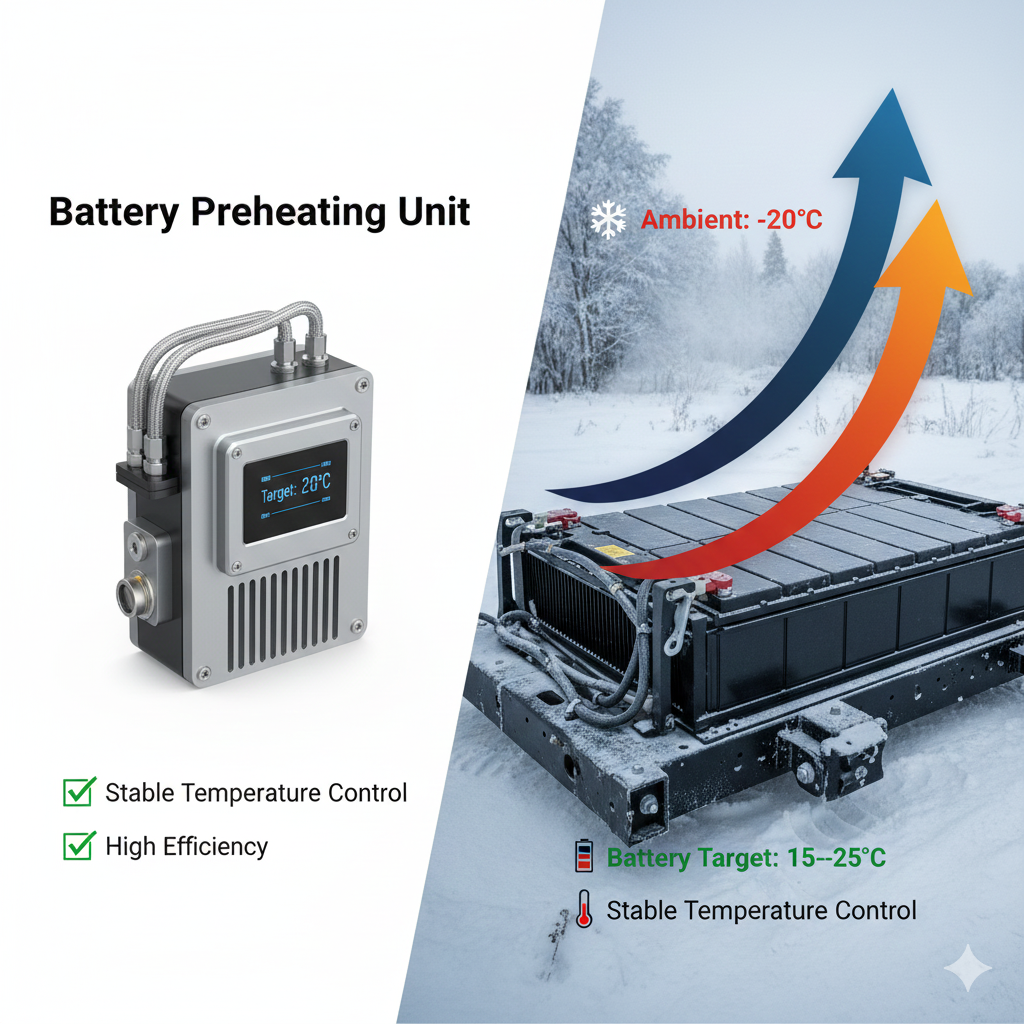
A battery preheating unit is a dedicated thermal management device designed to raise and stabilize battery temperature before operation in cold or sub-zero environments.
By actively heating battery cells to their optimal operating temperature range, the unit ensures
reliable power output, improved energy efficiency, extended battery life, and enhanced safety.
Battery preheating units are widely applied in electric vehicles (EVs), energy storage systems (ESS),
industrial battery packs, laboratory testing platforms, and mobile power equipment operating in low-temperature conditions.
Unlike passive insulation or self-heating through discharge, a battery preheating unit provides
controlled, uniform, and predictive thermal conditioning,
enabling batteries to perform consistently regardless of ambient temperature fluctuations.
Industry Pain Points Solved
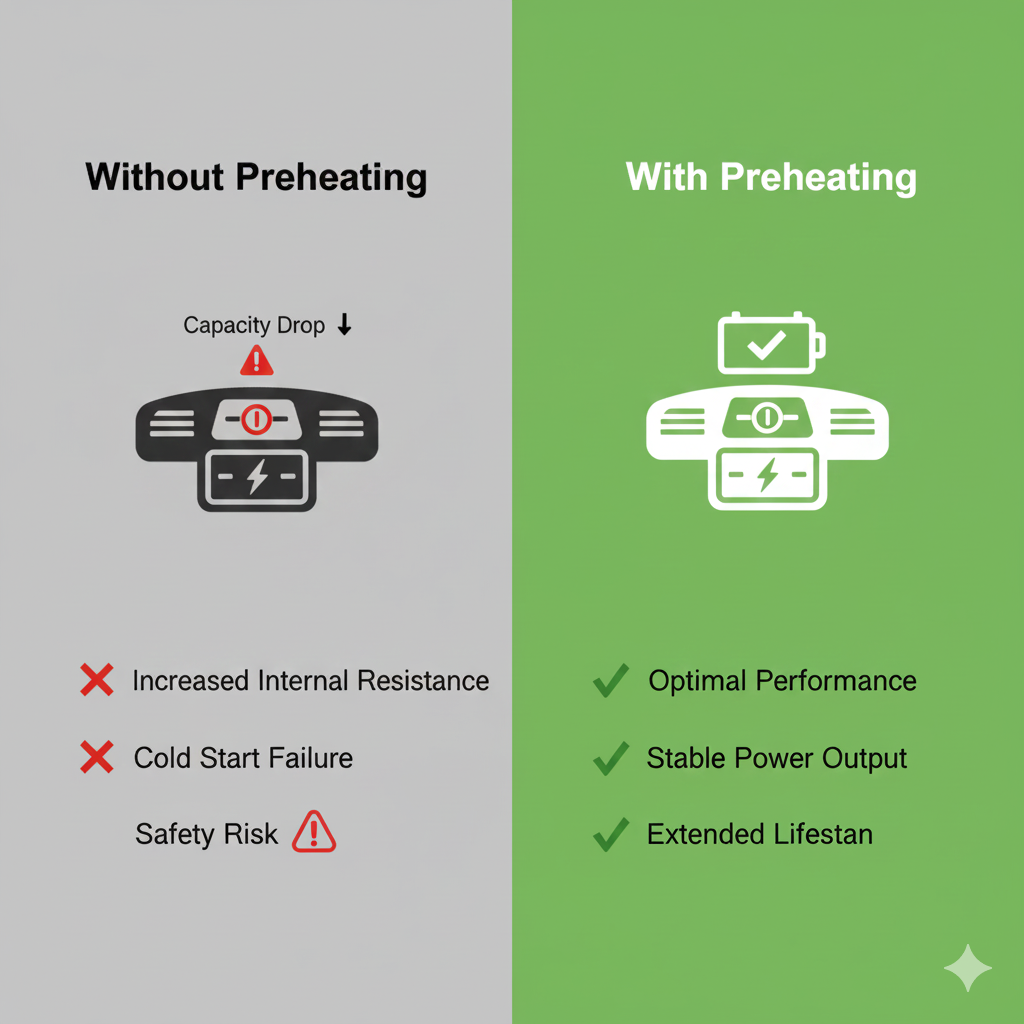
Capacity Loss at Low Temperatures
Lithium-ion and other advanced batteries suffer significant capacity degradation when operating below their optimal temperature range.
Internal resistance increases sharply, leading to reduced discharge capacity and voltage instability.
Battery Damage and Safety Risks
Charging or discharging batteries at low temperatures can cause lithium plating, internal short circuits,
and irreversible cell damage, increasing long-term safety risks.
Cold Start Instability
Cold starts result in delayed system startup, inconsistent power delivery,
and reduced efficiency for EVs, industrial systems, and energy storage platforms.
Accelerated Battery Aging
Repeated low-temperature operation accelerates degradation mechanisms,
shortening battery lifespan and increasing replacement costs.
Inefficient Traditional Heating
Conventional resistive or ambient heating methods consume excessive energy
and lack precise temperature control.
Working Principle (Step Structure)
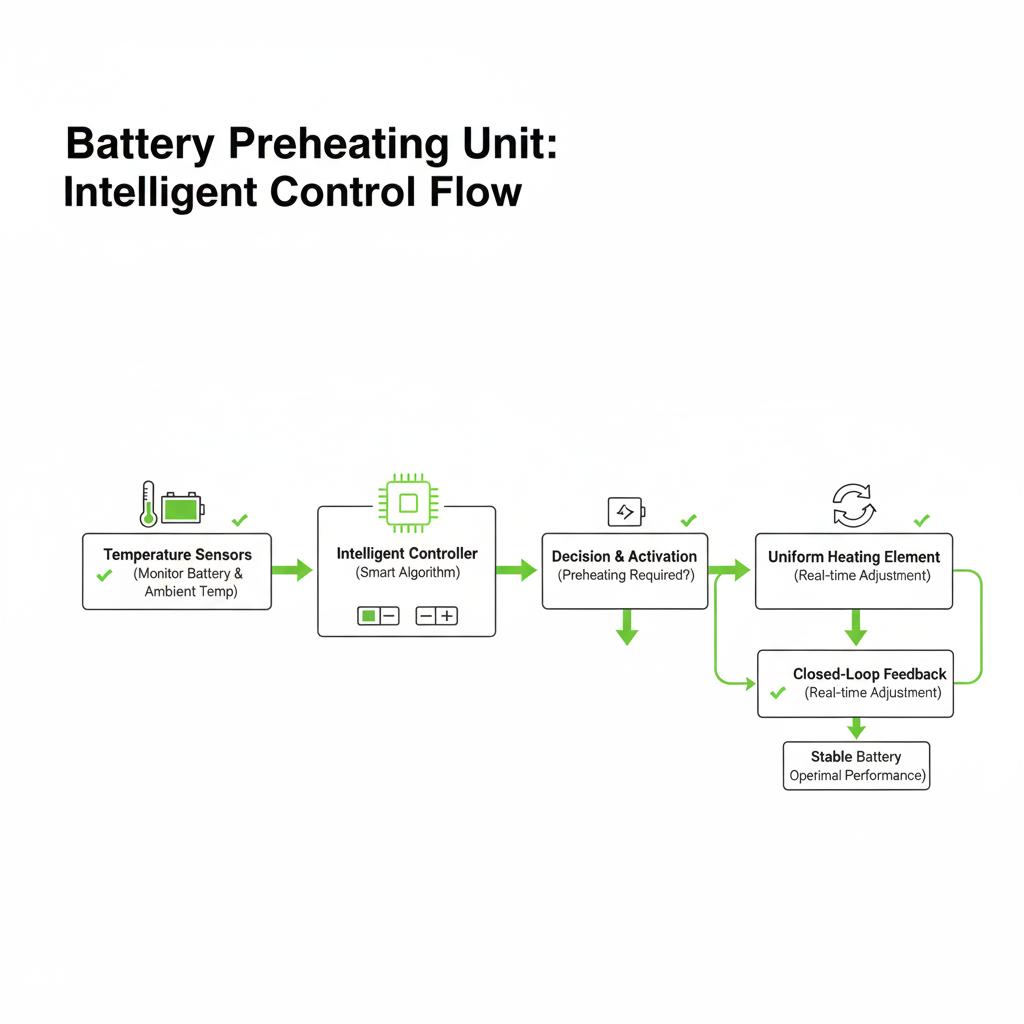
Step 1: Temperature Detection
Integrated sensors monitor ambient and battery temperatures continuously.
When temperatures fall below the threshold, the system activates automatically.
Step 2: Intelligent Control
The controller calculates heating demand based on battery size,
chemistry, and environmental conditions.
Step 3: Uniform Heat Distribution
Controlled heat is evenly delivered across the battery pack,
preventing localized overheating.
Step 4: Closed-Loop Stabilization
Real-time feedback adjusts heating output dynamically to maintain optimal temperature.
Step 5: Transition to Normal Operation
Once target temperature is reached, heating output is reduced
and full control shifts to the BMS.
Case Study
Application Background
A grid-scale energy storage system operating in a region with winter temperatures down to -25°C.
Challenges
The system suffered from cold-start failures and more than 30% performance loss during winter.
Solution
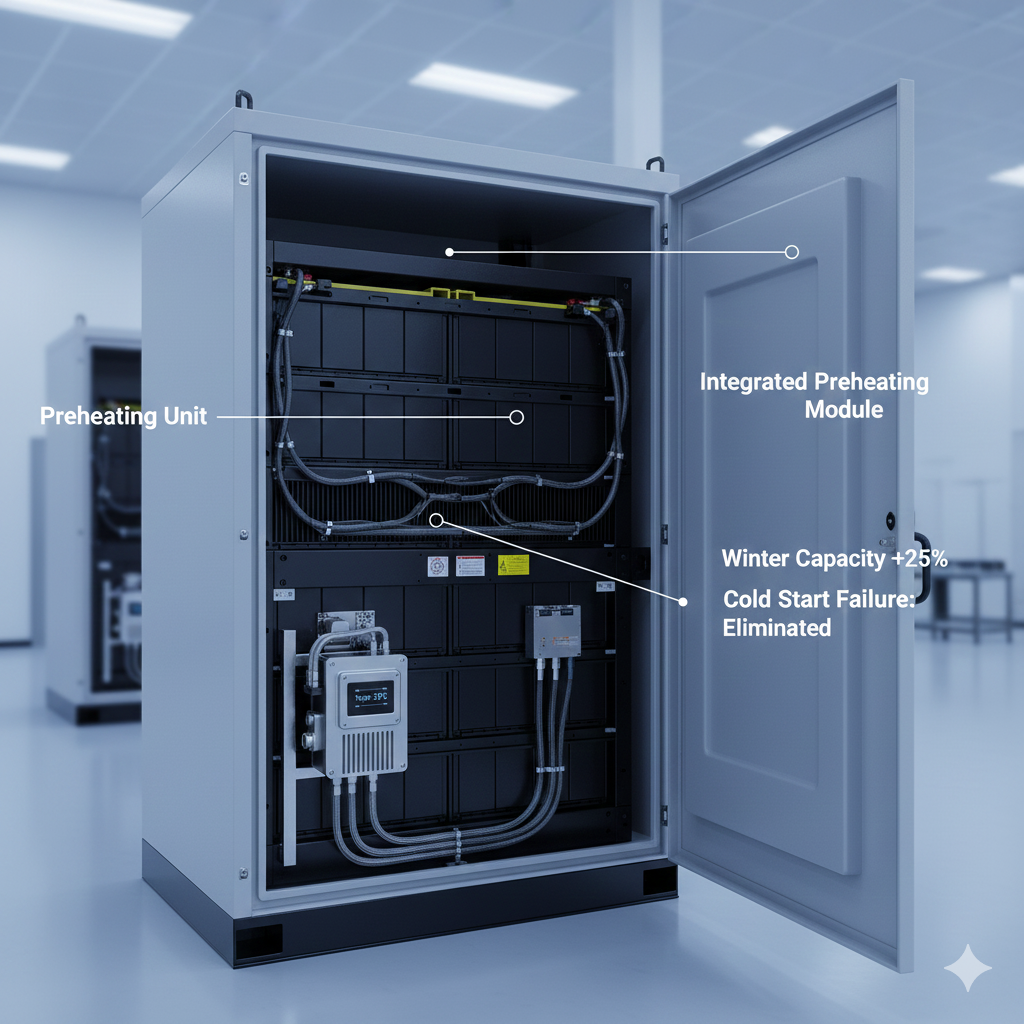
Battery preheating units were integrated into each battery module
and activated prior to scheduled discharge cycles.
Results
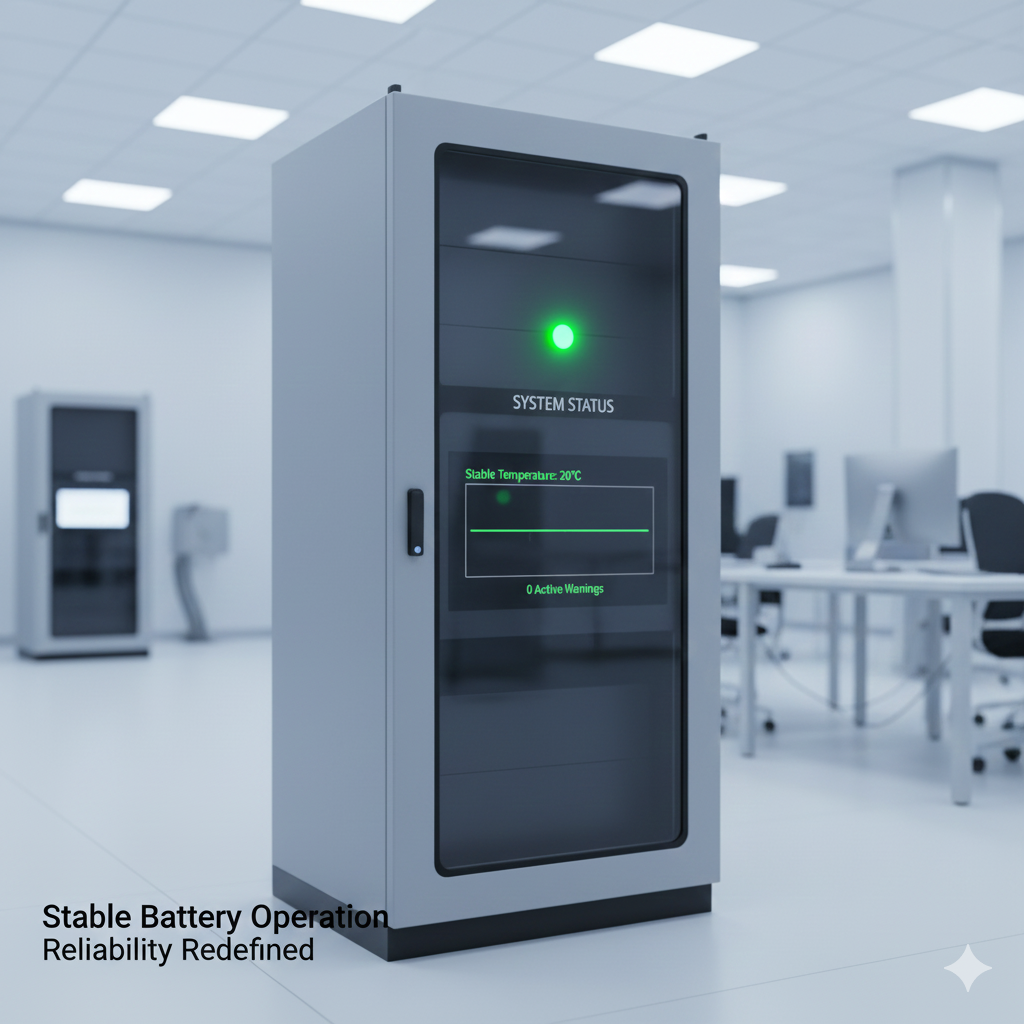
- Stable operating temperature between 15°C and 25°C
- Over 25% increase in winter discharge capacity
- Elimination of cold-start failures
- Battery lifespan extended by 20–30%
- Reduced heating energy consumption
Comparison with Traditional Heating Methods
| Aspect | Battery Preheating Unit | Resistive Heater | Ambient Heating |
|---|---|---|---|
| Temperature Accuracy | High | Medium | Low |
| Energy Efficiency | High | Low | Very Low |
| Heating Uniformity | Excellent | Poor | Inconsistent |
| Safety | High | Medium | Low |
| Battery Lifespan Impact | Positive | Neutral / Negative | Negative |
FAQ
Q1: Why is battery preheating necessary in cold environments?
Low temperatures reduce capacity and increase safety risks. Preheating ensures stable operation.
Q2: Does preheating consume a lot of energy?
Modern systems are highly efficient and consume far less energy than resistive heating.
Q3: Is it compatible with different battery chemistries?
Yes, including lithium-ion and lithium iron phosphate.
Q4: Can it integrate with existing BMS?
Yes, seamless integration is supported.
Q5: Does it improve battery lifespan?
Yes, by reducing low-temperature stress.
Q6: Is long-term operation safe?
Closed-loop control ensures safe continuous operation.
Q7: How fast is the heating process?
Heating speed depends on battery size and ambient conditions.
Q8: Which applications benefit most?
EVs, ESS, industrial batteries, laboratory testing, and mobile power systems.
Conclusion
A Battery Preheating Unit for Reliable Performance in Low-Temperature Environments
is a critical component of modern battery thermal management strategies.
By addressing capacity loss, safety risks, cold-start instability, and accelerated aging,
battery preheating units ensure consistent, efficient, and safe battery performance
in demanding environments.