1. Overview of Industrial High-Temperature Heat Pumps in Coca-Cola Production
Coca-Cola manufacturing involves multiple thermal processes such as syrup preparation, sugar
dissolution, ingredient sterilization, CIP/SIP cleaning, hot-water batching, and beverage pipeline
sanitation. Traditional heating relies heavily on natural gas or coal-fired boilers, which generate
high emissions, high energy costs, and unstable heat output.
Industrial high-temperature heat pumps recover low-grade factory waste heat and upgrade it to
produce stable 65–90°C hot water needed across Coca-Cola’s thermal processes. This significantly
improves energy efficiency, reduces carbon footprint, and supports beverage plants in meeting
international ESG and sustainability standards.
2. Key Industry Pain Points Addressed by High-Temperature Heat Pumps
- High energy consumption from boilers due to continuous heating demand.
- Volatile natural gas costs affecting production cost stability.
- Difficulty in maintaining stable 70–90°C water for syrup and cleaning processes.
- Environmental pressure from carbon emissions and combustion residues.
- Low utilization of internal waste heat from plant operations.
- High maintenance and safety risks associated with combustion systems.
- Inconsistent heating during peak production periods.
- Challenges in meeting multinational beverage industry sustainability thresholds.
3. How the High-temperature heat pump Solves These Problems
- Step 1 – Waste Heat Collection:
The heat pump collects heat from ambient air, process cooling water, compressor waste heat,
or other low-temperature sources generated inside Coca-Cola plants. - Step 2 – Heat Upgrade Through Compression:
The system compresses refrigerant to upgrade captured heat to a higher temperature level. - Step 3 – High-Temperature Water Output:
The heat pump delivers stable 65–90°C hot water to syrup lines, sterilization units, and CIP systems. - Step 4 – Waste Heat Recycling Loop:
Recovered heat is brought back into the cycle, improving energy efficiency up to 380–400%. - Step 5 – System Optimization and Energy Saving:
The PLC-controlled system adjusts heat output based on real-time production load, ensuring
continuous and cost-effective operation.
4. Core Product Specifications for Coca-Cola Production
The following heat pump models are suitable for syrup heating, CIP cleaning, sterilization, and production hot water.
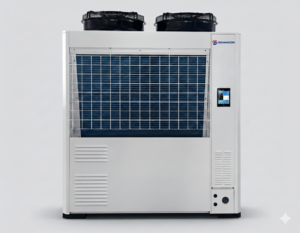
| Item | Premium Model ZMZ-2HTCR-43 | Standard Model ZMZ-2HTCR |
|---|---|---|
| Winter Performance Label | Winter※1 | Winter※2 |
| Standard Heating Capacity | 84.3 kW※3 | 77.4 kW※3 |
| Power Consumption (50/60 Hz) | 25.6 / 25.7 kW | 25.1 / 25.2 kW |
| Annual Efficiency (50/60 Hz) | 3.9 / 3.9 | 3.8 / 3.8 |
| Inlet Water Temperature | 5–65°C | 5–65°C |
| Outlet Water Temperature | 65–90°C | 65–90°C |
| Max. Water Flow | 35 L/min | 33 L/min |
| Dimensions (W×L×H) | 1250×1900×2360 mm | 1250×1900×2085 mm |
| Weight (Net/Gross) | 1367 / 1382 kg | 1344 / 1359 kg |
| Operating Temperature | -15–43°C | -15–43°C |
5. Application Case: Coca-Cola Manufacturing Plant
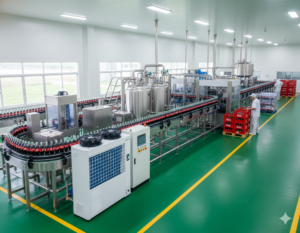
A Coca-Cola bottling plant previously relied on natural-gas boilers to supply hot water for syrup
cooking, sugar dissolution, bottle sterilization, and CIP cleaning. Energy costs fluctuated widely, and
boiler emissions created environmental pressure.
After introducing two sets of ZMZ-2HTCR-43 high-temperature heat pumps, the plant achieved the
following performance:
- Reduced natural gas usage by 68%.
- Lowered total thermal energy cost per ton of beverage by 42%.
- Maintained continuous 80–90°C hot water for syrup processing.
- CIP cleaning cycle efficiency increased by 22%.
- Carbon emissions reduced by 1,100 tons annually.
- Heat recovery utilization reached 45% of overall thermal demand.
The system now provides reliable heating for syrup mixing, hot water batching, pasteurization support,
equipment sterilization, and full-factory CIP/SIP operations.
6. FAQ
- Can the heat pump provide continuous 80–90°C hot water?
Yes. The system delivers high-temperature water stably for syrup preparation and CIP processes. - Is it compatible with Coca-Cola’s strict hygiene standards?
Yes. The heat pump features closed-loop heating, no combustion, and no exhaust gases. - Can it replace natural-gas boilers entirely?
In most plants, yes. Some choose a hybrid configuration for peak-load assurance. - What is the average energy saving?
Energy savings range from 35% to 60% depending on plant conditions. - Is the system suitable for cold regions?
Yes. It operates at ambient temperatures as low as –15°C. - Does it support CIP/SIP?
Yes. It maintains stable hot water supply required for sanitation. - How long is the ROI?
Between 1.5 and 3 years on average. - Can multiple heat pumps operate in parallel?
Yes. Modular parallel operation is supported for large beverage factories.
7. Authoritative Summary
By recovering factory waste heat and delivering a reliable 65–90°C hot water supply, industrial
high-temperature heat pumps effectively replace fossil-fuel boilers in Coca-Cola production lines.
They significantly reduce energy consumption, stabilize operating costs, support global ESG
standards, and offer a cleaner, safer, and more efficient heating solution for beverage
manufacturing.